Hair reduction for every skin tone, plus pigmentation, redness and tattoo removal. Led by a senior laser therapist with more than twelve years in clinics.
Your laser treatments are planned and carried out by our senior skin and laser therapist. She holds a Bachelor of Dermal Sciences, a graduate certificate in IPL and laser hair reduction and a Diploma of Beauty Therapy, and has spent more than twelve years in laser and skin clinics, including training other therapists.
That experience matters most on olive and deeper skin, where the right settings are the difference between a good result and a burn. We never guess. Every course starts with a patch test.
Patch test before every new course
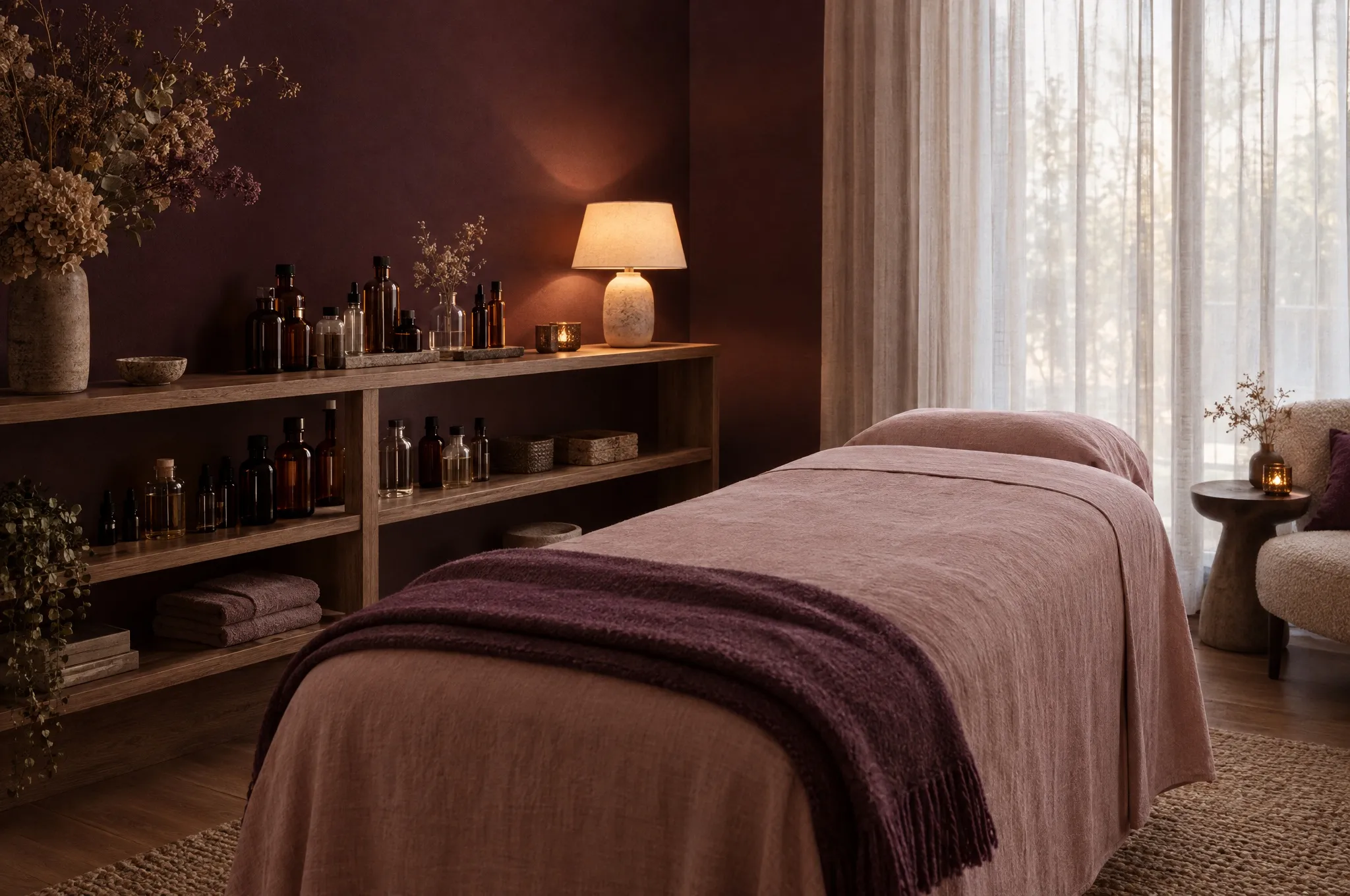
Private room, female therapist
Every setting recorded, visit by visit
How a course works
Laser reduces hair growth over a course of sessions. It does not remove hair permanently, and results vary from person to person.
01
Consultation and patch test
We look at your skin, hair colour and history, then test a small area. Settings are chosen for you, not for a chart.
02
Your first session
Most areas take minutes, not hours. You may feel a warm snap, cooled straight away.
03
A planned course
Hair grows in cycles, so results build over several sessions, usually four to eight weeks apart.
04
Review as you go
We note every setting and how your skin responded, and adjust at each visit.
Made for every skin tone
Olive, tan and deep skin are the norm in our part of Sydney. Laser can work well on all of them when the wavelength and energy are matched carefully, and when we are honest about what will and will not respond. Very fair, grey or red hair responds poorly to any laser; we will tell you at your patch test.
Fair
Light
Olive
Tan
Deep
Very deep
Areas and prices
Laser opens once our devices are commissioned. You can request a patch test now and we will contact you first.
Laser hair reduction
Per session. Course pricing is discussed at your patch test.
Results vary from person to person. A consultation is required before any advanced treatment, and
you are never asked to decide on the day. Read about risks and recovery.
Before your session
Shave the area the day before. Please do not wax, thread or pluck for four weeks.
Keep the area out of the sun and off fake tan for two weeks.
Tell us about any new medication, including antibiotics and acne treatments.
Come with clean skin: no deodorant, lotion or makeup on the area.
After your session
Mild redness can last a few hours. A cool compress helps.
Use SPF 50 on treated skin every day, and skip hot showers, saunas and the gym for 24 hours.
Shed hairs can look like regrowth for a week or two. That is normal.
Message us if anything feels unusual. We would rather hear from you.
Safety is the treatment
Listed devicesEvery laser and IPL device in the studio is listed on the Australian Register of Therapeutic Goods.
Eye protectionYou and your therapist wear protective eyewear for every pulse.
RecordsYour skin type, settings and reactions are written down at every visit.
Honest adviceIf laser is not right for your skin or hair, we will say so and suggest what is.
Is laser hair reduction suitable for olive and dark skin?
Yes, with the right approach. Laser targets the pigment in the hair, so the aim is to heat the hair without overheating the surrounding skin. Deeper skin needs settings and a laser type chosen for it, plus a patch test. Our senior therapist has more than twelve years in laser clinics and treats all skin types. Results vary from person to person.
What is a Fitzpatrick skin type?
It is a simple scale from 1 to 6 that describes how your skin reacts to the sun. Type 1 is very fair skin that always burns. Type 6 is deep brown skin that rarely burns. Many olive skin tones sit around types 3 and 4. Knowing your type helps us choose safe laser settings and decide how cautious to be.
How many laser sessions will I need?
Most people need a course of around six to eight sessions, and some areas or hair types need more. Hair grows in cycles, and laser only affects hairs in the active growth phase, which is why one session is never enough. After the course, occasional top-up sessions may be needed. Results vary with hair colour, skin type and hormones.
How far apart are laser sessions?
Face sessions are usually spaced about four to six weeks apart, and body areas about six to eight weeks apart. Spacing follows the hair growth cycle, so coming back too early does not speed things up. As hair thins, gaps between sessions often get longer. We will set a schedule for each area at your first appointment.
Does laser hair reduction hurt?
Most people describe it as a quick snap or a warm flick, like a rubber band. Sensitive areas such as the upper lip and bikini line feel sharper, and it usually eases as the hair thins over the course. Cooling during and after treatment helps. Tell your therapist at any time if you are uncomfortable and settings can be reviewed.
Should I shave before laser?
Yes. Shave the area the day before your appointment so the laser reaches the hair below the skin without burning hair on the surface. Do not wax, pluck, thread or use hair removal cream for about four weeks before, because the laser needs the hair root in place. Come with clean skin, no deodorant, fake tan or makeup on the area.
Can I go in the sun before and after laser?
Avoid tanning and strong sun for at least two to four weeks before and after each session. Tanned skin holds more pigment, which raises the risk of burns and pigment changes. Use SPF 50+ daily on treated areas that are exposed. Remove fake tan fully before you come. In Sydney summer, a hat and shade matter as much as sunscreen.
I have PCOS or hormonal hair growth. Will laser work for me?
Laser can reduce the look of hair in hormone-sensitive areas such as the chin and jawline, but hormones can keep producing new hairs, so you may need more sessions and regular maintenance. Results vary from person to person. If hair growth is new, sudden or heavy, please see your GP first. They can check for an underlying cause before you start.
Do you treat men?
Yes. Laser hair reduction is available for women and men, including a full-body session for men at $400 and a full back at $200. Men are treated in a private room, with the same patch test, consultation and aftercare as every other client. Results vary from person to person, and coarse hair on the back or chest usually needs a full course.
How private is a Brazilian laser appointment?
Very. Your treatment is done by a female therapist in a private room with the door closed. You undress only the area being treated and are covered with a towel or disposable underwear throughout. Our therapists do this every day and keep the appointment calm and efficient. A Brazilian session is $75. Please shave the area the day before.
Why do I need a patch test?
Every client has a patch test before a first laser treatment. It checks how your skin responds and lets us set safe settings for you. We test a small area, then you wait before the full session so any reaction has time to show. We also ask about medications, skincare and recent sun, all of which change how skin reacts to laser.
Is laser hair reduction permanent?
Laser is hair reduction, not permanent removal. A full course usually leaves hair finer, lighter and much sparser, and many people need only occasional top-ups afterwards. Fair, grey, red and very light hair responds poorly because it has little pigment for the laser to target. Results vary from person to person, which is why we start with a consultation and patch test.
When do laser appointments open?
Laser appointments open once our devices are confirmed and registered for use in the studio. You are welcome to send an enquiry now, and we will contact you to arrange a consultation and patch test as soon as bookings open. Prices are already listed, starting at $40 for the upper lip or underarms.
Can you treat sun spots and uneven pigment?
We offer laser pigmentation from $250 per session and IPL skin rejuvenation at $220, both for sun spots and uneven tone. Not all pigment is the same. Some types, such as hormonal pigment, can darken with heat, so we assess your skin first and may start with gentler options. A consultation and patch test are required, and results vary from person to person.
What should I do about a mole or a spot that is changing?
Please see your GP or a dermatologist before any cosmetic treatment. A spot that is new, growing, changing shape or colour, itching or bleeding needs a medical check. We never treat moles, and we do not treat any spot that has not been looked at by a doctor if we have concerns. Australia has high skin cancer rates, so regular skin checks matter.
Can you treat facial redness and small visible vessels?
Our capillaries and vascular treatment starts from $250 and targets visible small vessels and redness, usually on the nose and cheeks. Several sessions may be needed, and some redness can return over time with sun, heat and triggers such as spicy food. Ongoing flushing can have medical causes, so we may suggest seeing your GP first. Results vary from person to person.
How many sessions does laser tattoo removal take?
Most tattoos need several sessions, often six to twelve or more, spaced at least six to eight weeks apart. Black ink usually fades best, while some colours are slower. Size, ink depth, age of the tattoo and your skin type all play a part. Sessions are $200 small, $250 medium and $350 large. A consultation and patch test are required.
First step
Book a patch test
A short visit, a close look at your skin and hair, and a plan with honest expectations. Then you decide.