Sun protection after skin and laser treatments in Sydney
How to protect your skin from the Sydney sun after laser, peels, IPL and resurfacing: SPF, timing, clothing, and the mistakes that cause dark marks.
Sun protection is the most important part of aftercare for almost every skin and laser treatment. It matters more than any serum, and in Sydney it matters all year round.
After treatment, skin is more sensitive to light. Sun exposure can cause burns, redness that lasts longer than it should, and dark marks that can take months to fade. For olive and deeper skin, those marks are more likely.
Here is how to protect your skin properly, and the mistakes we see most often.
Why treated skin needs extra care
Treatments such as laser hair reduction, IPL, laser pigmentation, chemical peels and resurfacing all work by creating a controlled response in the skin. For a while afterwards, the skin’s surface is thinner, more reactive, or busy settling down. During that time, ultraviolet light can:
- cause sunburn more easily
- trigger pigment cells to make more pigment
- slow down how quickly redness settles
- undo the improvement you paid for
Heat can also darken some pigment, even without direct sun. That is why we talk about both sun and heat.
Sydney’s sun, in plain terms
The UV index measures the strength of the sun’s burning rays. The Cancer Council recommends sun protection whenever the UV index is 3 or above. In Sydney, that is most days of the year, including many winter days around midday. In summer it often reaches extreme levels.
Western Sydney adds heat. Summer days often pass 40 degrees, and the suburbs away from the coast stay hotter for longer.
How long to protect your skin
| Treatment | Strict sun avoidance |
|---|---|
| Laser hair reduction | 2 to 4 weeks before and after each session |
| IPL or laser pigmentation | 2 to 4 weeks before and after |
| Light chemical peel | At least 1 week after, SPF daily always |
| Medium peel | At least 2 to 4 weeks after |
| RF microneedling | At least 1 to 2 weeks after |
| Fractional resurfacing or CO2 | Several weeks after, as advised |
These are general guides. Your therapist will give you specific advice for your skin and treatment.
Your sun protection checklist
Sunscreen
- Use a broad spectrum SPF 50+ every morning, even if you are staying inside.
- Apply enough. For the face and neck, that is about half a teaspoon.
- Reapply every two hours when outdoors, and after sweating or wiping your face.
- On very fresh skin, a gentle mineral sunscreen may feel more comfortable. Ask us what suits your skin.
- A tinted sunscreen can help, because the tint blocks some visible light, which can darken pigment.
Clothing and shade
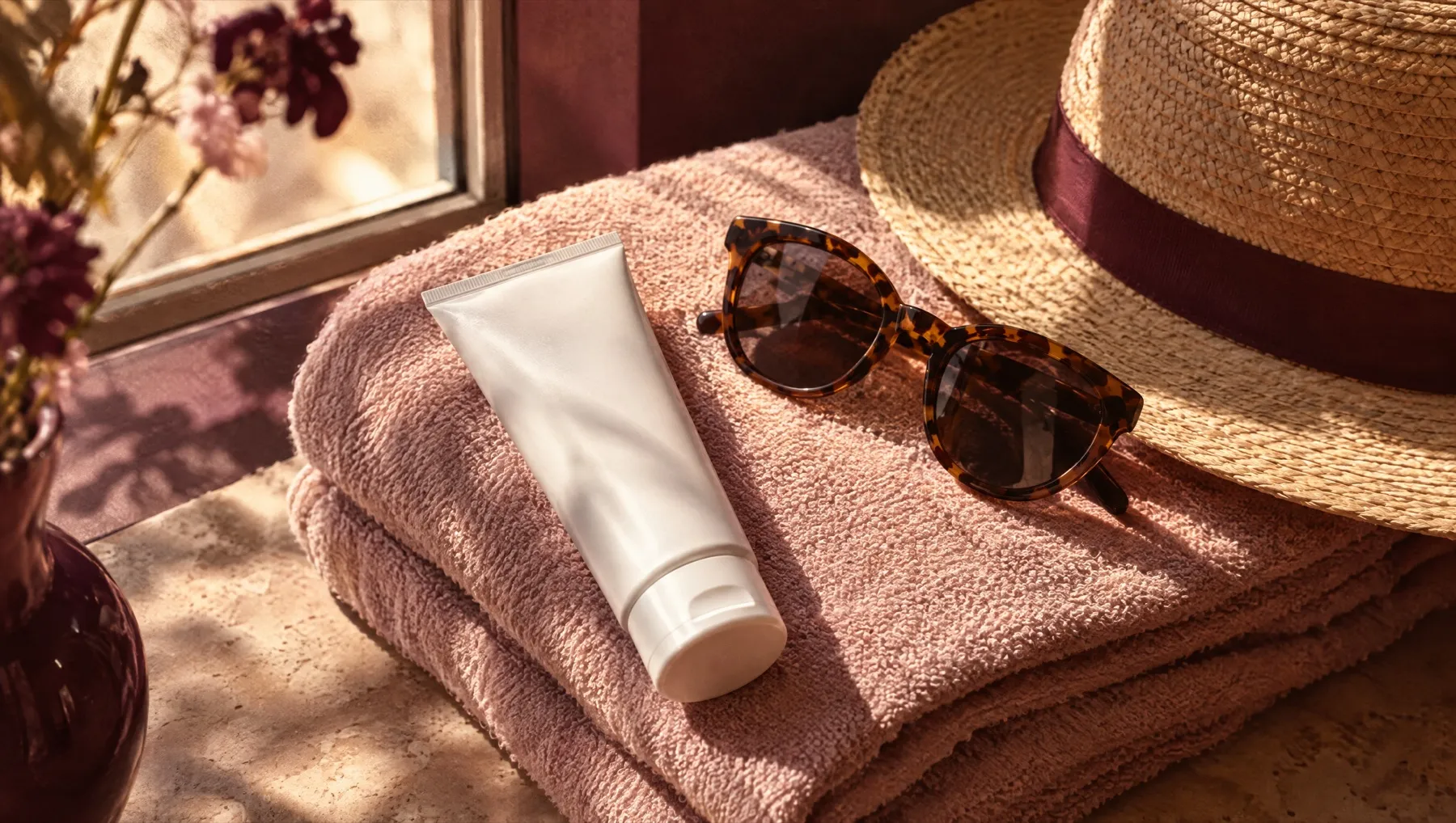
- Wear a broad-brimmed hat. Caps leave cheeks, ears and neck exposed.
- Wear sunglasses that meet the Australian standard.
- For treated arms and legs, wear loose, lightweight long sleeves or pants.
- Many of our clients already wear a headscarf or modest clothing, which helps cover treated skin. The face still needs sunscreen.
- Seek shade between about 10am and 3pm, when UV is usually strongest.
Everyday exposure
- Driving: car side windows can let UV through. Wear sunscreen on long drives.
- School pickup, sport and shopping: short trips add up.
- Cloudy days: UV still reaches you through cloud.
- Indoors by a window: sit back from bright windows if your skin is freshly treated.
Heat matters too
After treatment, avoid:
- saunas, steam rooms and hot baths
- hot yoga and hard workouts for the first day or two
- cooking over a hot stove for long periods, if you can avoid it
- sitting in a parked car on a hot day
If your skin feels hot, a cool, clean cloth can help.
Common mistakes
- Skipping sunscreen because it is winter. UV is lower but still enough to darken pigment on many days.
- Using last summer’s sunscreen. Check the expiry date.
- Applying too little. A thin layer gives much less protection than the label.
- Forgetting to reapply. Morning sunscreen does not last until the afternoon school run.
- Fake tanning to cover redness. Fake tan can interfere with laser treatments and should be avoided before sessions.
- Going on holiday straight after a treatment. Plan treatments around beach trips and travel, not before them.
What to do if you get sun after treatment
If you have had sun exposure soon after a treatment:
- cool the skin gently with water
- apply a plain, soothing moisturiser
- do not use actives or exfoliants
- protect the area strictly from then on
- contact us, so we can check your skin and adjust your next session
If you notice blistering, severe redness, swelling or pain, contact us straight away and see your GP.
When to see your GP
See your GP or a dermatologist if you have a burn that blisters, a spot that changes, or any mole that is new, growing or different from the others. Regular skin checks are important in Australia for every skin tone.
Protect your results
Good sun habits are what make treatments worth it. Read our guide to risks and recovery, explore facials and skin and laser treatments, or book a skin analysis for a plan built around your skin and the seasons.